Naira dips slightly as FX liquidity moderates in November
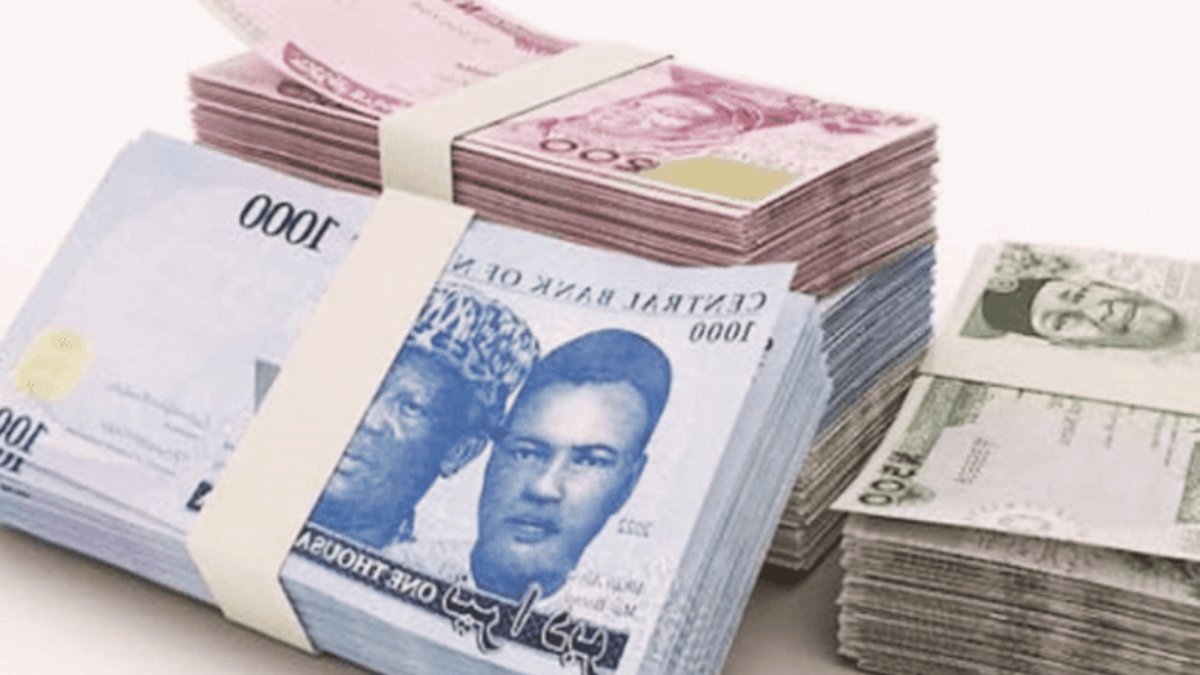
November’s first trading session saw the naira experience a slight decline in value across the foreign exchange market, with trading volumes decreasing amidst varied liquidity conditions. According to data from the Central Bank of Nigeria (CBN), the naira’s value dropped by N1.56, or 0.12 percent, with the US dollar trading at N1,347.94 on Monday, compared to N1,346.26 on the last trading day of October 2026. In the parallel market, the local currency remained stable at N1,385 per dollar on Tuesday morning. The gap between the official and parallel market rates narrowed to N38, or 2.82 percent, from N39, or 2.89 percent, on Friday.
Trading volumes decreased, with the total value of transactions in the interbank foreign exchange market segment falling by 63 percent to $21.77 million on Monday, down from $58.85 million on Friday. The number of transactions also decreased by 68.06 percent to 23, from 72 during the same period.
Although the most recent data on turnover and the number of transactions at the Nigerian Foreign Exchange Market window were not available at the time of reporting, previous data showed that turnover increased by 27.11 percent to $583.33 million on Friday, up from $458.91 million the previous day. The number of transactions also rose by 2.02 percent to 252, from 247.
Nigeria’s external reserves, which enable the CBN to support the naira and meet the country’s external obligations, continued to rise, reaching $55.22 billion as of October 30, 2026. This represents a 27.91 percent increase from $43.17 billion in the corresponding period of 2025, thereby strengthening the country’s defenses against potential external shocks.
Read Also: Burnham and Healey’s shift away from Thatcher’s Big Bang legacy
This increase in reserve levels occurred amidst a rise in net foreign exchange inflows into the economy during the second quarter of 2026, primarily driven by increased inflows from autonomous sources. CBN data indicates that net foreign exchange inflows rose to $21.09 billion in the second quarter, up from $20.30 billion in the preceding quarter. However, aggregate foreign exchange inflows declined by 4.24 percent to $30.03 billion from $31.36 billion in the first quarter, while total outflows fell by 19.17 percent to $8.94 billion from $11.06 billion.
Foreign exchange inflows through the CBN decreased by 20.47 percent to $8.12 billion from $10.21 billion, while inflows through autonomous sources increased by 3.59 percent to $21.91 billion from $21.15 billion in the preceding quarter. On the outflow side, transactions through the CBN declined by 35.89 percent to $4.77 billion from $7.44 billion, while outflows through autonomous sources increased by 15.51 percent to $4.17 billion from $3.61 billion.
Autonomous sources recorded a net foreign exchange inflow of $17.74 billion, an increase from $17.53 billion in the preceding quarter. The CBN also reported a higher net inflow of $3.35 billion, compared to $2.77 billion in the first quarter. Despite the improvement in net inflows, average turnover at the Nigerian Foreign Exchange Market declined by 7.56 percent to $530.42 million in the second quarter, down from $573.81 million in the first quarter, indicating a decrease in average daily trading activity.


